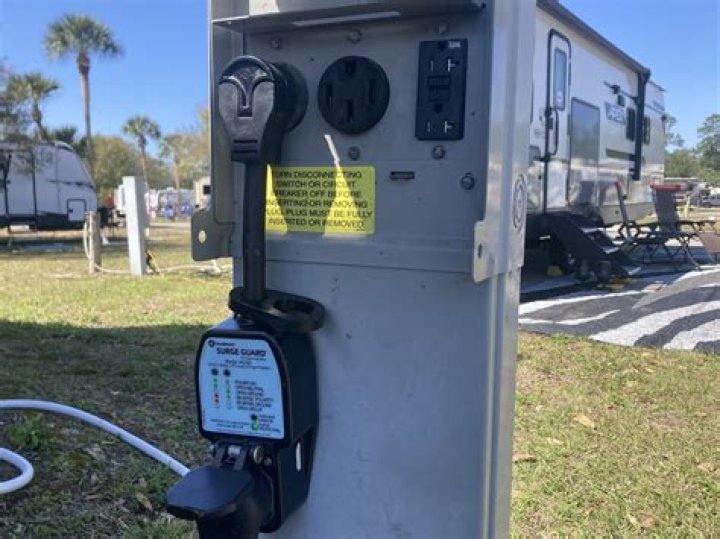
Do you need electrical hookup for RV?
RVs do not need to be plugged in but they can be. In fact, an RV can be plugged into many different sources and a plugged-in RV offers a lot of additional functionality. So most RVers prefer to be plugged into the electrical grid and a water hose when possible.
Can you hook an RV up to your home’s electrical system?
While you can hook your RV up to a home’s electrical system, you won’t be able to run every appliance or use the electricity 24/7. You will most likely need to set your RV up to be able to connect to the standard 3-prong household plug you use at home.
Can you use an RV without a hookup?
Dry camping, also referred to as boondocking, is camping in your RV without hookups. No electricity, water or sewer connections.
What kind of hookups are needed for an RV?
Most RV parks provide either partial hookups, which include electricity and water, or full hookups, which add sewer service. Some deluxe parks also include hookups for cable television and telephone lines.
What is Boondocking in RVing?
Boondocking is a term used by RVers to describe RVing without being connected to water, electric, or sewer. Because you’re not connected to any services it’s also called dry camping.
How much does it cost to put RV hookups on property?
How Much Does It Cost to Install RV Hookups? (Water, Power, Sewer, Pad)
| RV Hookup | DIY Cost | Professional Install |
|---|---|---|
| Water Hookup | $30 | $700 |
| Power Hookup | $100 | $1200 |
| Sewer Hookup | Free | $6100 |
| Total Cost | $430 | $12,000 |
Can you hook up an RV to a home electrical outlet?
You will most likely need to set your RV up to be able to connect to the standard 3-prong household plug you use at home. Since your RV will need at least a 30/50 Amp hookup to power the rig, you’ll be limited in what you can run connected to a home’s 15/20 Amp electrical outlet.
How can I hook up a sewer hookup to my RV?
So how do you smoothly connect water, electric and sewer hookups to your RV at home? 1. Build a Gravel or Concrete Parking Pad 2. Run a Water Hookup to the RV 3. Run an Electrical Hookup to the RV 4. Install or Use Your Existing Permanent Sewer Hookup
What kind of hookup do I need for my RV?
If you want your RV hookups to go as seamlessly as possible, you will want to build a gravel or concrete pad. This setup allows your RV to rest on a flat surface outside of your home. Ultimately, it will keep the weight of your RV from settling into the ground.
What do I need to power up my RV?
If you do need to plug your RV into an electrical system, the process to do so is fairly simple. The first step is to make sure you have everything you need. If your RV is 30 amps, you’ll require a 30a female to 15a male adapter (which tends to run around $10 to $20 ).
How do you connect RV to home power?
Follow these steps to hook an RV up to your home’s electrical system: Before you plug in the extension cord from your home to your RV, ensure all electrical appliances are turned off in your rig. Turn off the breakers to your home, too. Plug the extension cord into your RV’s electrical hookups via an adapter, if necessary.
Does your RV have an electrical problem?
Electrical problems in an RV or camper are very common, and often RV owners don’t know where to start when they deal with them. This article provides some basic information for the RV owner to help diagnose and repair electrical problems efficiently and safely. I’d like you to: Understand your RV electrical system in general.
Do you full hook up for RV?
Most RV parks provide either partial hookups , which include electricity and water, or full hookups , which add sewer service. Some deluxe parks also include hookups for cable television and telephone lines. Some RVs, including pop-up campers and most travel trailers, use 30-amp electric power.
How do you hook up electrical?
Connect the wires by making a clockwise bend in each one with pliers and hooking the wire to the screw terminal. That way, tightening the screw draws the wire closer to the screw and makes a more secure connection. If you’re installing a 15-amp outlet with 14-gauge wire,…
