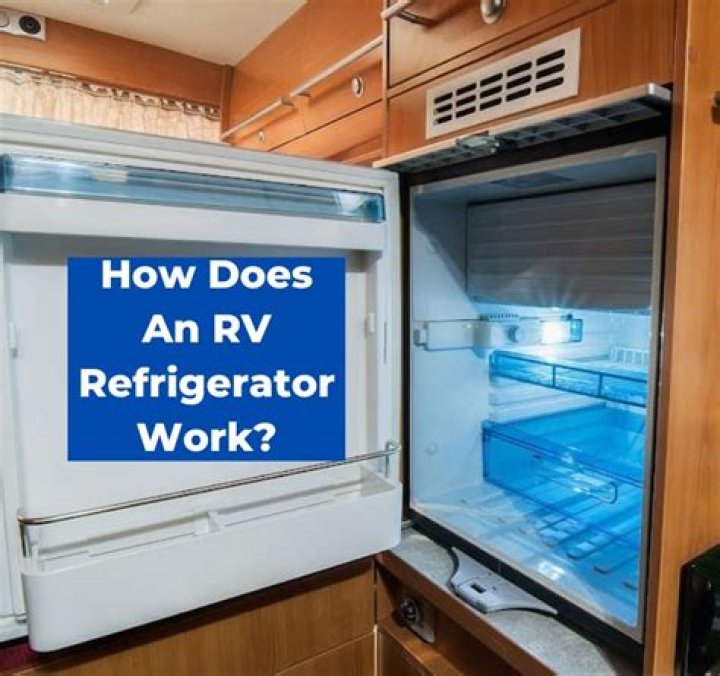
How does the refrigerator work in an RV?
For the refrigerator to work properly, you need to have your RV level when not driving it down the road. This allows the cooling unit to move the different gases throughout the cooling system. The two main gases used in an RV Fridge are ammonia and hydrogen. The cooling system turns the ammonia gas into a liquid and the more you have the better.
Where to adjust the flame on an RV refrigerator?
Flame Adjustment Referencing the photo to the left, the flame alignment should be in the center of flue. Clean the flue before use after long storage or non-use of your refrigerator. An important part of RV refrigerator repair is to make sure that bugs have not made nests inside your flue.
What should I do if my RV refrigerator catches on fire?
An important part of RV refrigerator repair is to make sure that bugs have not made nests inside your flue. These nests can be very hard to remove. Always open the doors of the refrigerator during storage to allow moisture to evaporate. Condensation can be trapped in the insulation of the refrigerator and rot the cooling unit evaporator.
Why is my RV fridge not cooling properly?
If your RV fridge is struggling to stay cold in propane mode the problem is probably the burner’s orifice. It’s an easy fix anyone can do, and it usually works.
Why is My Refrigerator not working in my RV?
RV refrigerators don’t use thermocouples to detect the heat. Instead, there’s a sensor with a ceramic piece on the end of it. If there is a buildup of carbon or the piece is cracked, the sensor won’t detect the flame correctly and will shut off the gas. It’s cheap and easy to replace.
Can a conventional refrigerator work in a Dometic RV?
A conventional fridge wouldn’t have that flexibility. No appliance is without its problems, which means a section on Dometic RV refrigerator troubleshooting is necessary. Here are a few common fridge challenges along with solutions.
Flame Adjustment Referencing the photo to the left, the flame alignment should be in the center of flue. Clean the flue before use after long storage or non-use of your refrigerator. An important part of RV refrigerator repair is to make sure that bugs have not made nests inside your flue.
An important part of RV refrigerator repair is to make sure that bugs have not made nests inside your flue. These nests can be very hard to remove. Always open the doors of the refrigerator during storage to allow moisture to evaporate. Condensation can be trapped in the insulation of the refrigerator and rot the cooling unit evaporator.
What happens if your RV freezer stops working?
You have the luggage, the survival tools, and a stack of food and drinks in your RV refrigerator. Suddenly, your RV refrigerator stops working. That would be nothing short of a nightmare, for all the food will go bad. To your surprise, the RV refrigerator is not cooling, but the freezer is.
What should the temperature of the freezer be in an RV?
Ideal Cooling of an RV Refrigerator and Freezer The most suitable cooling for an RV refrigerator should be around 34 degrees, while the freezer should be at zero degrees. Similar to any other refrigerator, the RV refrigerator’s main compartment shouldn’t surpass 42 degrees.
What kind of refrigerant does a camper refrigerator use?
Before you give up the RV lifestyle, here are some troubleshooting fixes for camper refrigerators to keep you on the road. Modern home refrigerators use Puron as a substitute for Freon as a refrigerant. RV refrigerators use a cooling solution out of water, liquid ammonia, and hydrogen gas.
For the refrigerator to work properly, you need to have your RV level when not driving it down the road. This allows the cooling unit to move the different gases throughout the cooling system. The two main gases used in an RV Fridge are ammonia and hydrogen. The cooling system turns the ammonia gas into a liquid and the more you have the better.
You have the luggage, the survival tools, and a stack of food and drinks in your RV refrigerator. Suddenly, your RV refrigerator stops working. That would be nothing short of a nightmare, for all the food will go bad. To your surprise, the RV refrigerator is not cooling, but the freezer is.
What should the temperature be in an RV freezer?
In the perfect scenario, the RV freezer should be at zero degrees, while the RV refrigerator should be somewhere around 34 degrees. Just like any other refrigerator, the main compartment of an RV refrigerator should not be more than 42 degrees. To measure the temperature, make sure to use a refrigerator thermometer.
Before you give up the RV lifestyle, here are some troubleshooting fixes for camper refrigerators to keep you on the road. Modern home refrigerators use Puron as a substitute for Freon as a refrigerant. RV refrigerators use a cooling solution out of water, liquid ammonia, and hydrogen gas.
How to troubleshoot and fix a camper refrigerator?
How to Troubleshoot and Fix a Camper Refrigerator Issue #1: The pilot light keeps burning out. Issue #2: The fridge’s cooling unit is leaking. Issue #3: Ammonia sediment buildup has occurred. Issue #4: The fridge’s cooling unit is frozen solid. Issue #5: The fridge’s burner has failed.
How do you remove a fridge from an RV?
To remove the RV fridge access door all you have to do is use a flathead screwdriver, pliers, or even your fingers to turn the little black knobs on the top. Turn them halfway so they are both pointed straight up. Pull out and lift the panel off and away from the RV or travel trailer.
Why is my Refrigerator stalling in my camper?
When the refrigerator sits unused, ammonia leaks out in liquid form. This pool of liquid or sediment drips down to the cooling unit. Once you pull out the camper from storage and start using the refrigerator again, the cooling unit will stall.
