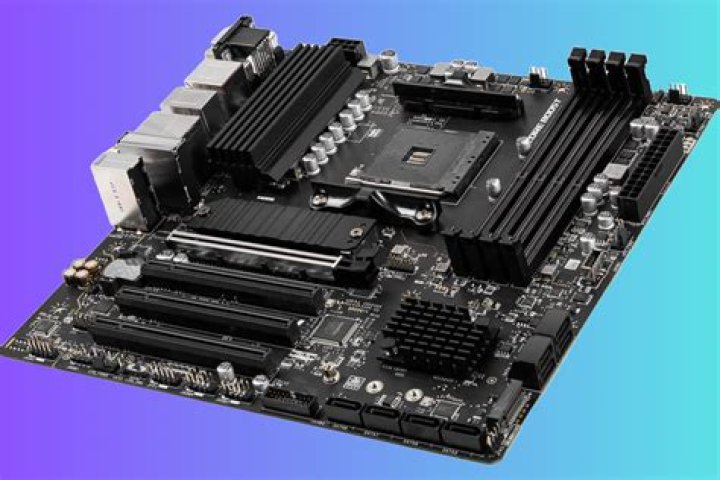
What should I do when I replace my Motherboard?
If you are reusing the CPU and/or memory, remove them from the old motherboard and install them on the new one. Replace the old back-panel I/O template with the template supplied with the new motherboard. Remove and install motherboard mounting posts as necessary to match the mounting holes on the new motherboard.
Is it bad to replace the ram on a motherboard?
Replacing it is relatively cheaper and easier, so this won’t prove too bad if it happens. If the RAM is positioned and working properly, check whether the CPU is inserted in its socket perfectly or not.
Can a bad capacitor be replaced on a motherboard?
Capacitors are the first thing to blow in a well-built electronic unit. The problem persists wherever a capacitor is used (commonly called the ‘Capacitor Plague’). The only option to this is to replace the capacitor with a new one. Spotting a bad capacitor is easy: it’s the one with the bulging top and leaking electrolytic goo.
How do I install a new motherboard in my case?
Install the CPU, CPU cooler, and RAM in your new motherboard, insert your motherboard’s I/O shield in the rear of your case, then place the motherboard into your empty case. The motherboard’s I/O shield. Put this in place on the rear of your case before you screw in your motherboard or you’ll have to do it all over again.
What happens if you don’t replace the motherboard?
Scenario 1: You haven’t replace the motherboard yet (in order to upgrade your computer) and your computer starts (boot) normally to Windows. In this case you have to modify the registry from the current working Windows environment before proceeding to computer upgrade. Scenario 2: Windows fails to boot because:
What should I do when I replace my Motherboard in Windows 10?
Windows 10 includes a license troubleshooter you can use to attempt to fix any post-motherboard issues. The troubleshooter should detect that you recently installed new hardware. After installing your new motherboard, press Windows Key + I, then head to Updates & Security > Activation, where you may find the Windows is not activated message.
How to repair and upgrade your motherboard [ book ]?
Replacing a Motherboard – Repairing and Upgrading Your PC [Book] The exact steps required to replace a motherboard depend on the specifics of the motherboard and case, the peripheral components to be connected, and so on. In general terms, the process is quite simple, if time-consuming:
What should I take out of my Motherboard?
The big items like graphics cards and Wi-Fi cards can come out of your motherboard first. Then go for SATA or other interface cables that connect your SSD, hard drive, or optical media drive to your motherboard. SATA cables connected to a motherboard. Finally, it’s time to disconnect all of the power cabling plugged into your motherboard.
