Why are dark pools used?
Dark pools are private exchanges for trading securities that are not accessible by the investing public. Dark pools were created in order to facilitate block trading by institutional investors who did not wish to impact the markets with their large orders and obtain adverse prices for their trades.
What is a dark pool in trading?
A dark pool is a privately organized financial forum or exchange for trading securities. Dark pools are a type of alternative trading system (ATS) that give certain investors the opportunity to place large orders and make trades without publicly revealing their intentions during the search for a buyer or seller.
Why are dark pools bad?
While dark pools offer distinct advantages to large players, the lack of transparency that is their biggest selling point also results in a number of disadvantages. These include price divergence from the public markets and a potential for abuse.
What is dark pool volume?
Dark pool liquidity is the trading volume created by institutional orders executed on private exchanges; information about these transactions is mostly unavailable to the public. Dark pool liquidity is also referred to as the upstairs market, dark liquidity, or dark pool.
How do you spot a dark pool activity?
One simple way to spot dark pool activity is by monitoring the internet. Financial journalists are constantly racing to report on big institutional trades. And they’re not easily deterred by something like a private computer network.
Is dark pool volume reported?
Dark pool transactions, like all OTC listed equity transactions, have to be reported to the tape in a timely fashion through a Trade Reporting Facility.
Are dark pool trades reported?
How are dark pools legal?
Dark pools, otherwise known as Alternative Trading Systems (ATS), are legal private securities marketplaces. Dark pool exchanges keep their confidentiality because of this over-the-counter model, in which neither party has to disclose any identifying or price information unless specific conditions compel them to.
What’s the effect of a darker color pool?
A darker pool colour will attract and absorb the sunrays. A darker pool colour may increase your pool water temperature by 2 to 3 degrees.
What should the color of the pool water be?
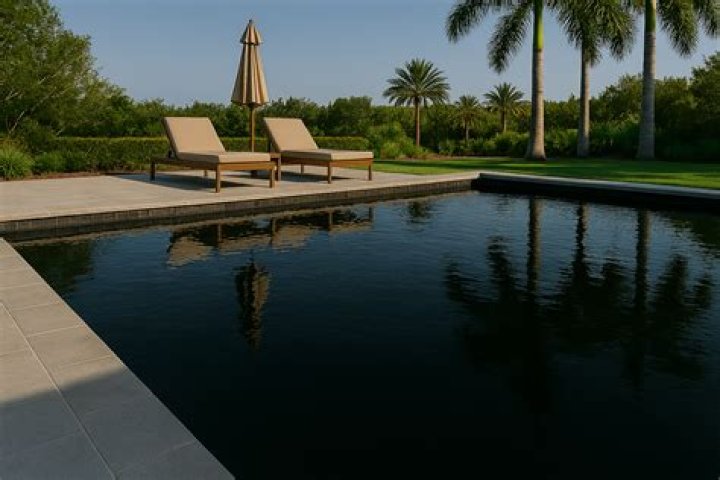
The darker your finish, the darker your pool water will be. The deeper the water, the darker it will appear. Water will seem lighter in shallower areas like steps, ledges, benches, and beach entries where the finish itself is more visible. Since your pool water will mirror its surroundings, many other factors will impact water color.
What’s the difference between white and dark bottom pools?
Dark bottom pools are reminiscent of a secluded lagoon, while bright or white bottom pools are much more like a tropical beach. “Thanks for everything, we love this service, and we love our pool.”
What are the different colors of pool plaster?
As wind velocity increases, so does the evaporation rate. The three most common pool plaster colors are gray, tan, and white. Gray produces a dark blue water color in sunlight, sandy or tan makes for a mild green color, and white produces clear light blues.
The darker your finish, the darker your pool water will be. The deeper the water, the darker it will appear. Water will seem lighter in shallower areas like steps, ledges, benches, and beach entries where the finish itself is more visible. Since your pool water will mirror its surroundings, many other factors will impact water color.
What makes the bottom of a pool Darker than the top?
All the heat from the sun is absorbed in the top foot of water and fails to reach the bottom at all. The factor that does actually make a difference in pool temperatures is cooling from evaporation. As wind velocity increases, so does the evaporation rate. The three most common pool plaster colors are gray, tan, and white.
What makes the color of a pool liner?
The sky, sunlight, and surrounding foliage can also impact the appearance of color and brightness of your liner and add a blue, green, or grayish tint. Your liner may also look slightly darker in the deeper areas of your pool due to how light travels through water.
What kind of tile makes pool water look blue?
The impact of other colored swimming pool tiles: As you might expect, blue glass tile will make pool water look blue. But what you might not know is that the shade of blue will also be reflected in water color.
